We’re on a mission to bring people together.
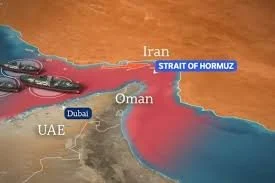
Creating groups of people, who are motivated to find out how they can mitigate the impact of the shortages and changes in costs as a consequence of the Strait of Hormuz control.
Introduction
No one has the answers of how to mitigate the consequences of the Iran-US war and their impact on your business! You will have to go out there and discover them!
Don’t expect the government to have them, You know your business better than any civil servant!
The Gulf Genesis Four Step Approach
Create a group of people, who are motivated to find out how to mitigate the impact of the shortages and changes in costs.
Get the group to assess the impact of the shortages and to audit the resources still available, and the liabilities that need to be dealt with.
Only then get the group to propose and evaluate possible mitigation strategies.
Get the group to agree how to best respond.
These steps need to be taken rapidly. A series of workshops (aka Hackathons)
Distribute “Your Best Practice”
Allow others to review, enhance and copy your ideas. No one has a monopoly on good practice, and the enhancements can benefit everyone.

We do more together.
The Problems
What are the problems now and the ones that will affect us in the upcoming months?
Are there ones that haven’t been identified as a consequences of the Iran-US war?
The main ones are increasing Price, Decreasing Quality, Delay in delivery, Partial or total loss of supply, or indeed multiple of these happening.
Price
One we all understand. In theory, the limited supplies go to the place where they add the most value, however, the reality is less benevolent. One key aspect is those without the cashflow are out-competed by those with cashflow.
Quality
With limited supply, alternate supplies will come to market. These will typically be supplies that are of inferior quality.
Delay
Where there are alternate sources, these may be on longer shipping routes. Some routes may cease to exist.
E.g. Flights from Kenya to many European cities have already been cut.
Fuel Crisis
Crude shipping capacity
22% of VLCC are trapped by the Gulf War
The round trip time from India to Qatar is 20 days
The round trip time from India to East Coast USA is 50 days via Suez… 75 days via Cape
20% of VLCC capacity has diverted to US, mainly via the cape
15% of refinery capacity.
Jet fuel & diesel most effected
Chemicals
Impacts global supplies of methanol, ammonia, urea, sulfur, and petrochemicals like ethylene glycol and polyolefins. causing significant price volatility and potential shortages for industrial, automotive, and agricultural sectors. - Institue of Materials, Minerals and Mining
Economy
It has cut off essential supply lines for oil and gas, fertilizer and industrial chemicals, prompting the IMF to warn of a possible global recession if the war does not abate.
Can We Find Solutions?
By working together we can looks to share ideas. These approches include the following…
Hackathons
12 hr sessions open to all, as well as by invitation depending on specialist areas.
Specialist meetings
Breakdown of industries and sectors
Possible Actions
Competition
Outbid
Increase stock
Work with competitors
Work with supply chain
Hoarding v Strategic Reserve
Working with competitors
Government intervention
Substitution
Alternate inputs
Changing process or formulation
Changing process or formulation of
your customer
Scheduling
- Knowing the input supply chain delays
- Reduced production levels
- Reducing overhead
The Latest Updates
From sources across the world.
70% of UK SMEs fear bankruptcy as Iran war hampers supply chains and drives costs higher.
UK SMEs trading internationally are facing a tipping point, with seven in ten warning they could be pushed into bankruptcy if disruption linked to the Iran war continues.
The IFM Magazine - 14 April 2026
Shipping, Supply Chains
In Asia, countries like Philippines ordered a national energy emergency, while Japan and South Korea dug deep into their reserves to sustain through the crisis. In the West, the pinch was felt at fuel stations and in terms of higher airfares. The impact of just the announcement of an agreement has the world hopeful.
NDTV - 15 June 2026
Hidden shockwaves
The most immediate, long-term economic danger lies not in fuel prices themselves but in rising food costs and disruptions to the production of advanced technology. The blockades of container vessels and the destruction of energy infrastructure in the Persian Gulf have severed supply lines for materials that modern industry and agriculture take for granted.
GIS Report - 5 June 2026
The Middle East conflict is pushing millions of people closer to hunger, as rising fuel and transport costs drive up food prices while funding shortfalls force aid agencies to scale back assistance, the U.N. World Food Programme said on Friday.
Reuters - 5 June 2026


Ready?
Feel free to contact us.